

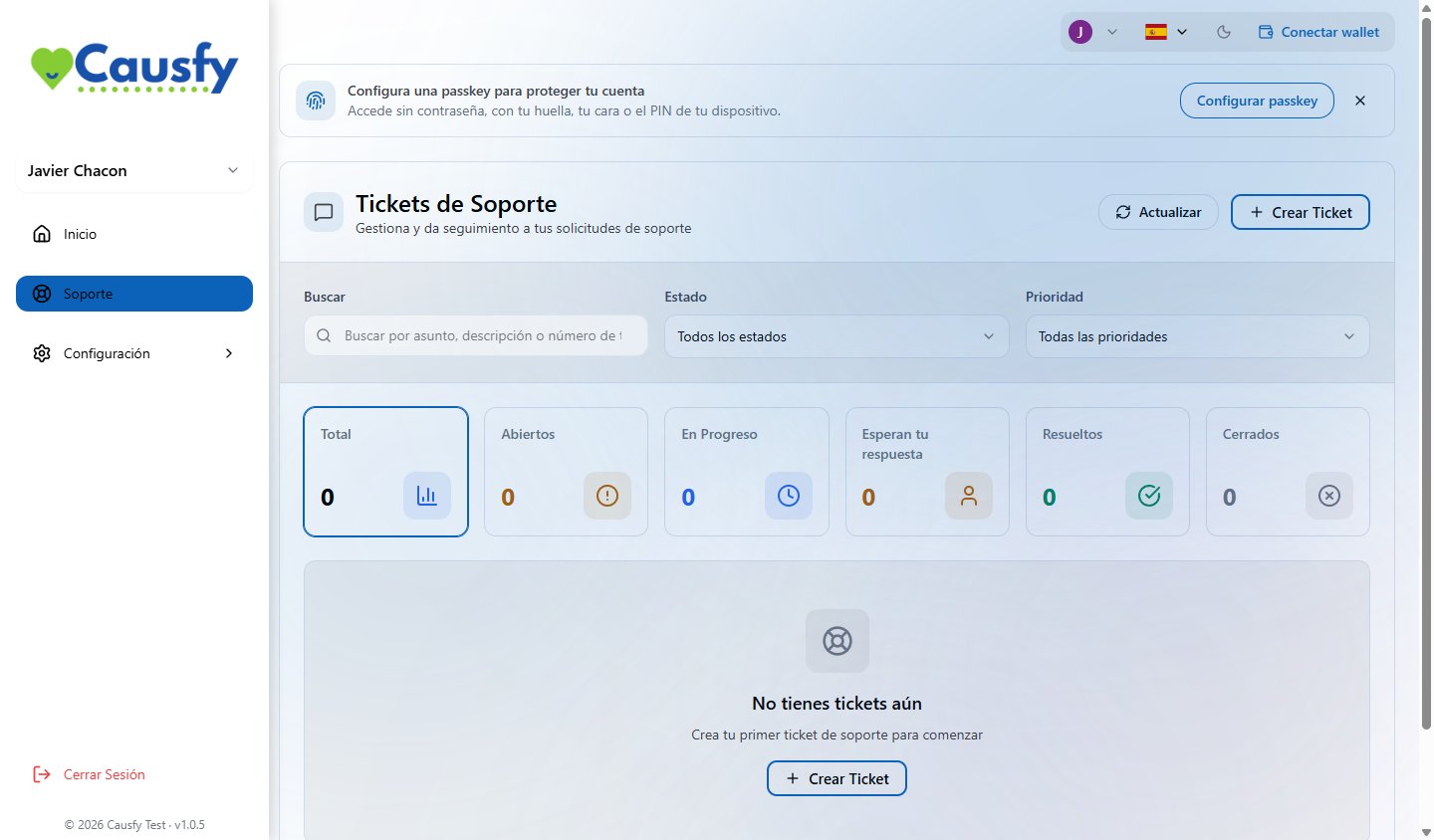
Support with no tickets yet. The button to create the first one is right there.
Opening a ticket
1
Press create ticket
If it is your first one, the screen offers it to you directly.
2
Subject
One line saying what is happening. “I can’t enable card payments” is useful; “problem” is not.
3
Type and priority
The type routes the ticket to whoever knows about that. The priority marks the real urgency, not the one you would like.
4
Describe the problem
What you did, what you expected and what happened. If there is an error message, copy it exactly.
5
Attach whatever helps
A screenshot saves three replies.
Following the ticket
In the list you see all of yours with their status. The ones marked Awaiting your reply are the ones stuck on your side: until you answer, they don’t move. Inside the ticket you have the full thread, the attachments, who is handling it and the history of what has happened.- Add Comment adds your reply to the thread.
- Close Ticket marks it as resolved.
- Reopen Ticket if the problem comes back, without having to start from scratch.
What to say so it gets sorted sooner
What support cannot do
- Approve your cause before review. That is decided by moderation and has its own circuit.
- Sort out whatever Stripe has pending with you. Those notices are handled inside Stripe.
- Get into your account on your behalf.